

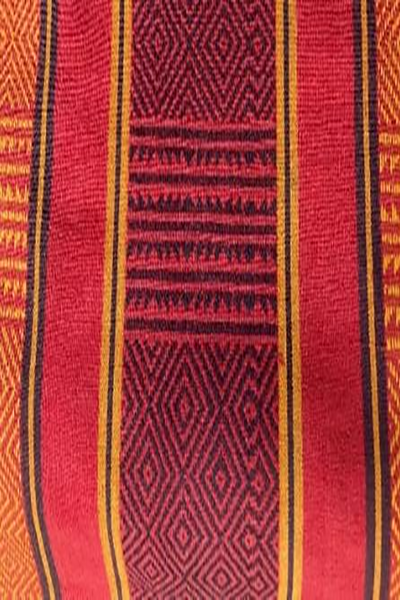
Briphul Paar
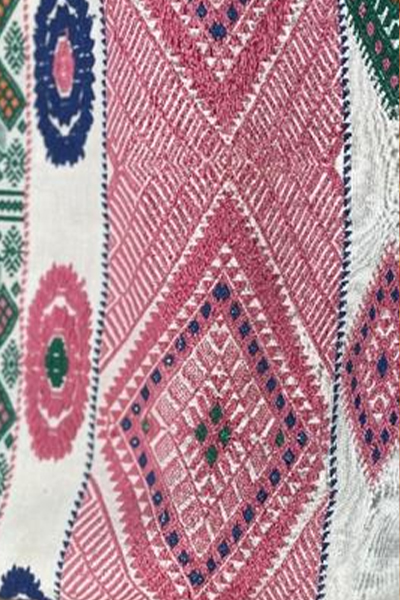
Diamond-shaped geometric patterns arranged symmetrically, featuring angular forms resembling a stylised flower or polygon. Repeating symmetrical diamond units with intricate angular fillings.
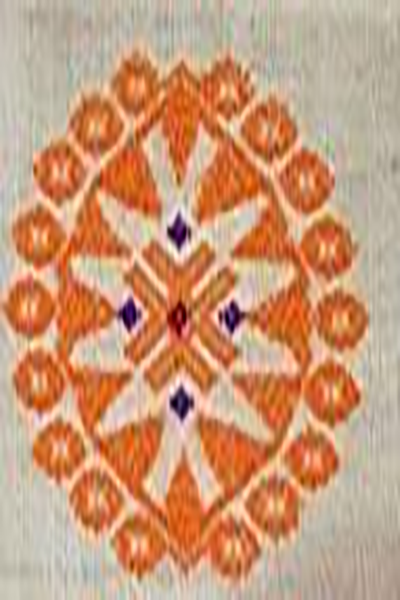
Toh Niken-Birds Eye
Circular shape resembling a bird's eye, rendered in repeating interlocked oval-circular units with intricate woven detailing.
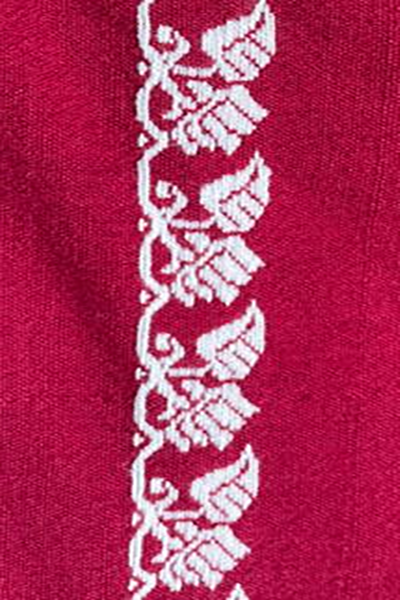
Podum Paar
Literal Translation- Lotus flower
A floral motif inspired by the lotus, featuring stylised petals arranged symmetrically around a central form. The design reflects the natural beauty of the lotus and is expressed through the geometric and angular style characteristic of Rabha textile motifs.
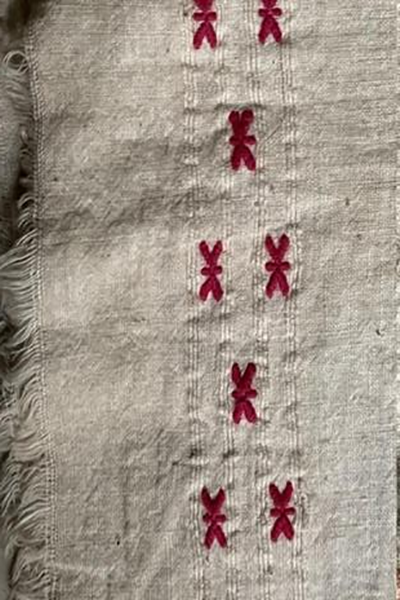
Chong Kambung Paar
Literal Translation- Ants & Bugs
Very primitive, small repeating cross or asterisk-like forms representing ants and bugs in simple hand-drawn line formations.
Rod Kata Paar
Literal Translation-Sun rays / Bright sunlight
A combination of small geometric shapes forming a diamond to represent the sun. Angular rays
Dalim Phul
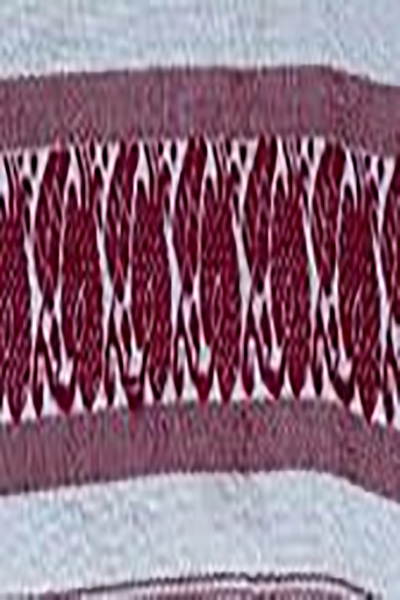
Literal Translation- Pomegranate creeper with leaf
Radiating circular motif with geometric petal forms arranged around a central star, depicting a pomegranate fruit with a leaf.
Topak Paar
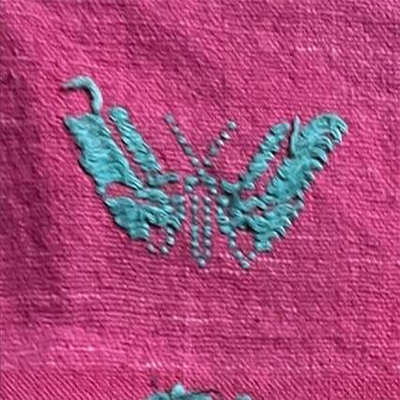
Literal Translation-Butterfly
Simple hand-drawn symmetrical wing forms with linear antennae and body, reflecting the tribe's reverence for wildlife.
Mokordoma Paar
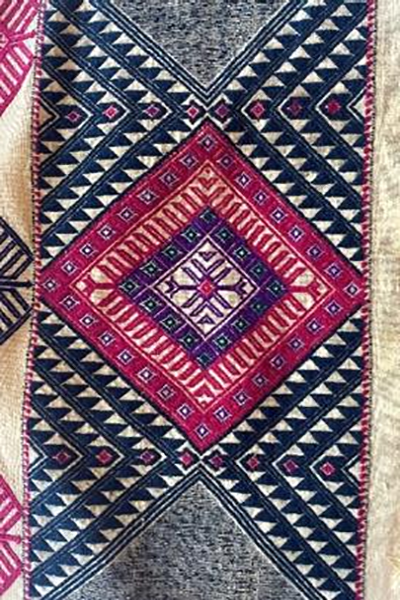
Literal Translation-Mirror like motif
Symmetrical diamond-shaped motif associated with victory and good luck. Worn around the neck during important occasions, it is traditionally believed to bring success in court cases. Originally called Jaap Paar, it became known as Mokordoma Paar, particularly among Pati Rabhas.
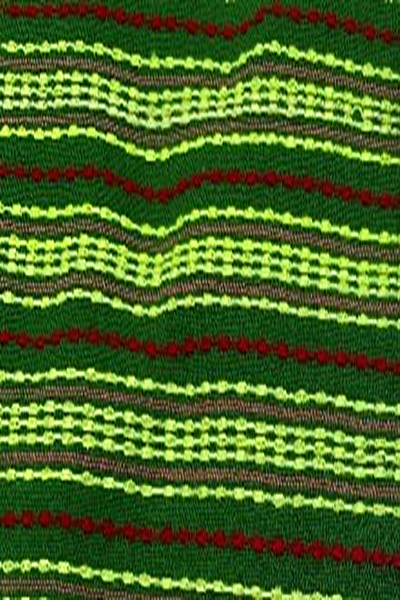
Mala-
Literal Translation-Chain Neckless worn by women
Simple repeating line and dot patterns arranged in horizontal bands, resembling links of a chain. Forms continuous chain-like borders across the textile.
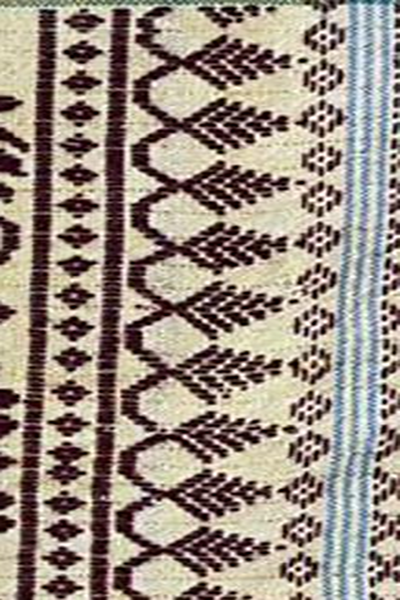
Dhekia Paat
Literal Translation-Fern Laef
Repeating plant-inspired forms are arranged in alternating mirrored rows.
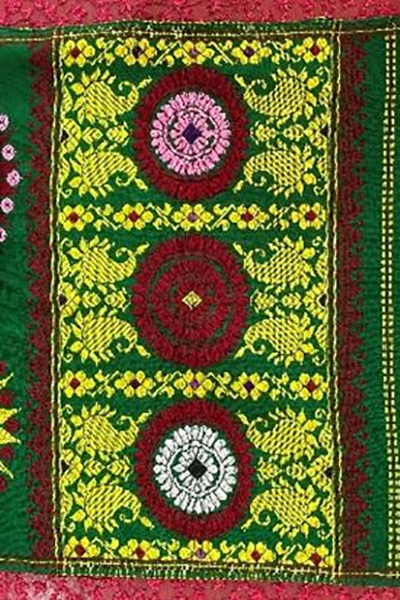
Modhus Paar or Bai Paar
Literal Meaning- Sacred ritual motif
Complex symmetrical motif combining circular, floral and zoomorphic elements. Used in Marai or Monokha Puja, it is considered sacred and auspicious, often woven along the edge of the attire.
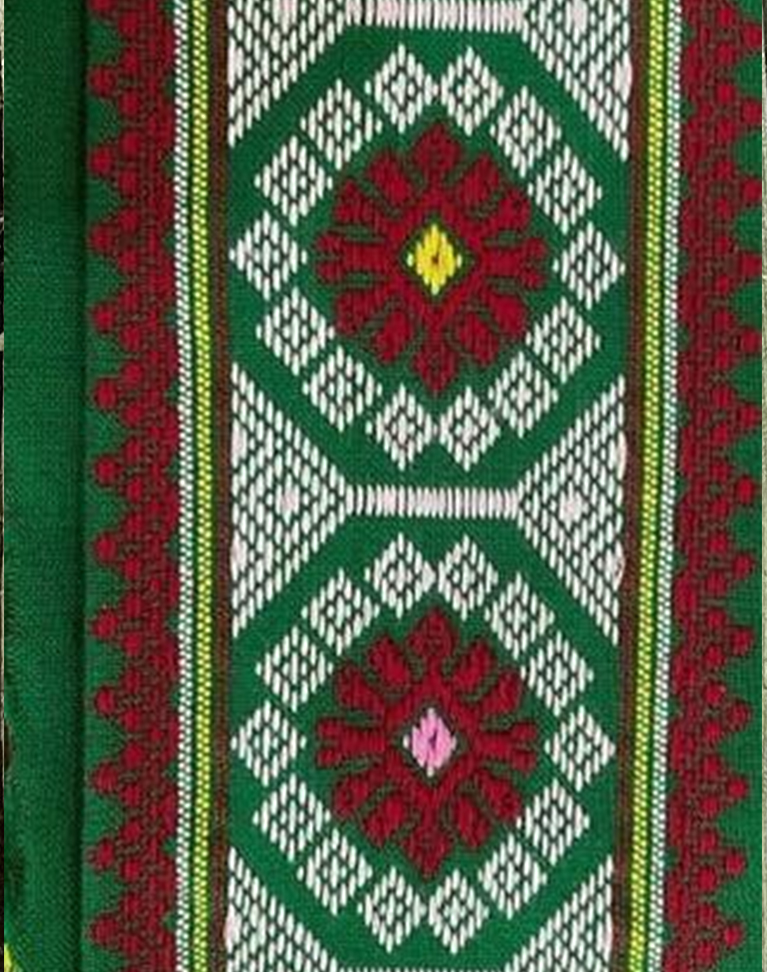
Chakra Paar/ Cheriki Paar
Literal Translation-Spinning wheel
Circular, spoke-like patterns resembling the structure of a traditional spinning wheel pay homage to the legacy of the artisans.
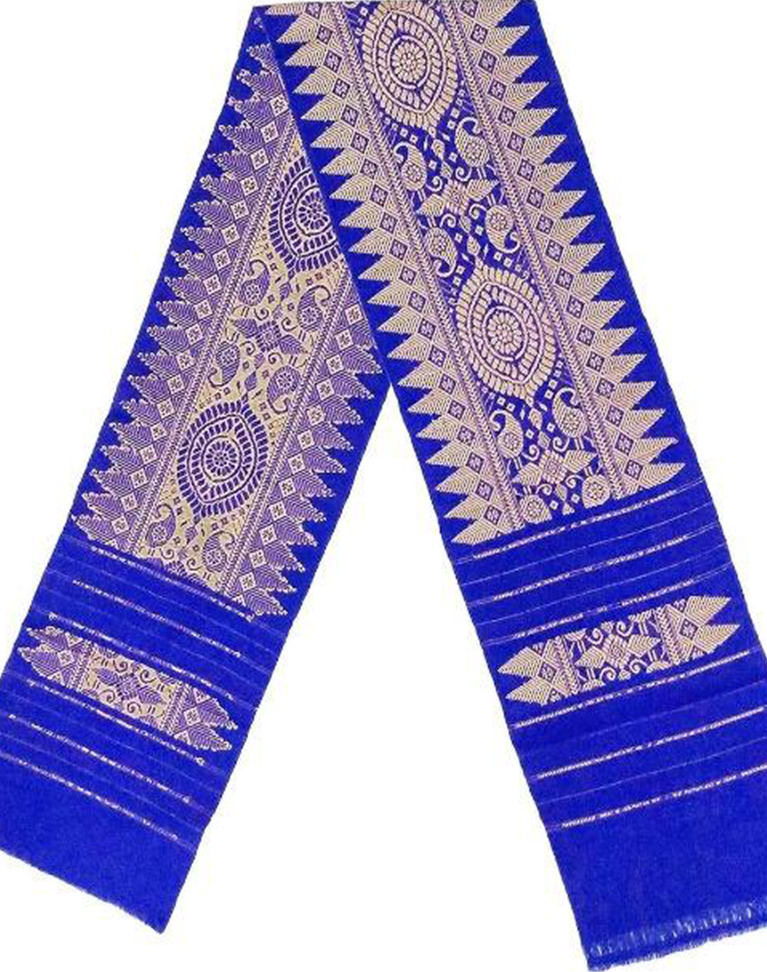
Aronai
Aronai is a traditional Bodo muffler featuring the Hajw or Pahar Agor floral pattern. Today, the colourful Aronai is a symbol of Bodo love and hospitality. It is traditionally offered to welcome guests and honour important dignitaries.
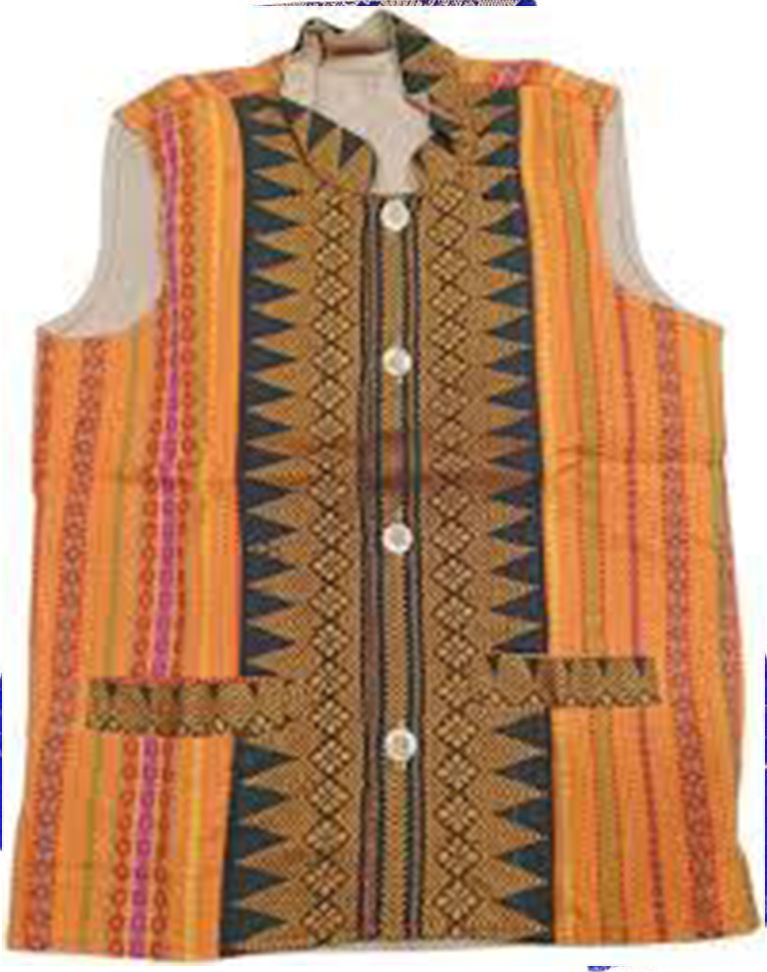
Khot Gosla
Khot Gosla is a simple, sleeveless, front-opening jacket available in colours such as yellow, green, red, and white, with various decorative designs. It is traditionally worn by Bodo men during special occasions, festivals, and socio-cultural events.
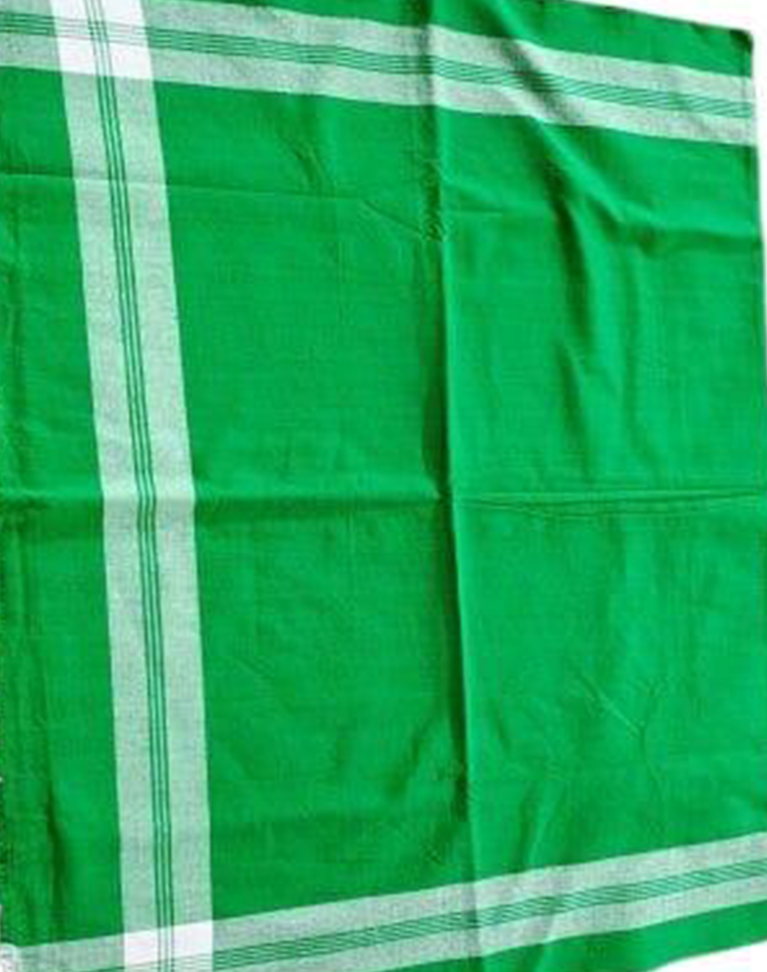
Gamsa
Gamsa is a traditional Bodo men’s garment, measuring about 1.5 m × 1.2 m. It is worn from the waist to the knees by tying it around the waist and can also be used as a towel while bathing. It comes in various colours and combinations, including green, red, white, and blue. Green is the most popular colour and a strong symbol of Bodo identity.
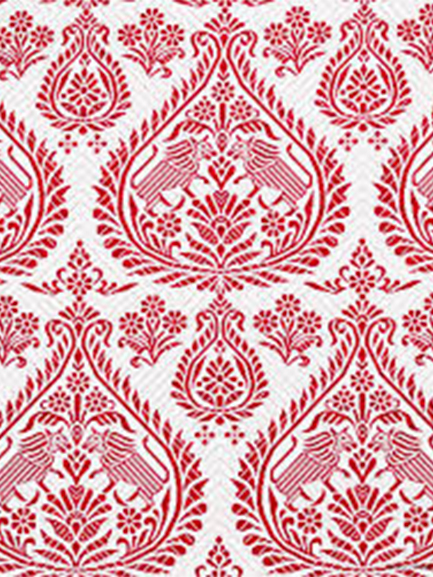
KING KHAP
Meaning of the Motif
Kingkhap shows two lions facing each other. It represents power, courage, bravery, royalty, and authority. Traditionally, it was woven with gold and silver threads.
History of the Motif
Kingkhap is linked to the Ahom dynasty (1228–1826) and Assam’s silk and textile traditions, especially Muga silk. During Rudra Singha’s reign, Mughal-inspired designs influenced Assamese textiles. Kingkhap became a symbol of royalty and high status, mainly worn by kings and nobles.
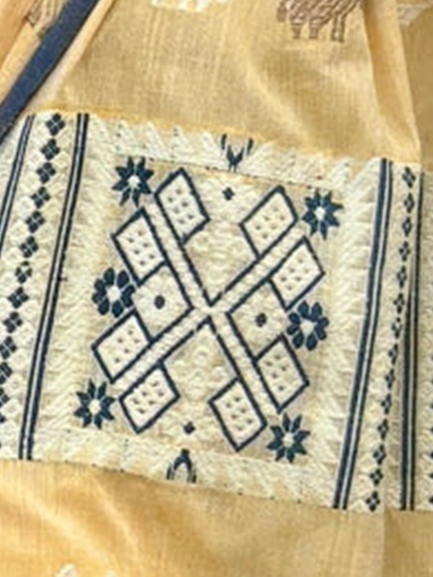
Bisoni Motif
Name and Meaning-The Bisoni motif represents the traditional Assamese hand fan. It symbolises grace, beauty, nobility, and respect and is linked to the Ahom kings and Majuli’s Satra community.
History and Significance-Bisoni fans were traditionally made from bamboo, cane, Muga silk, and velvet and used by royalty. The design later became part of Assamese clothing. Hengul (red) and Haital (yellow) were traditional colours, while today artisans use colours based on design and preference.
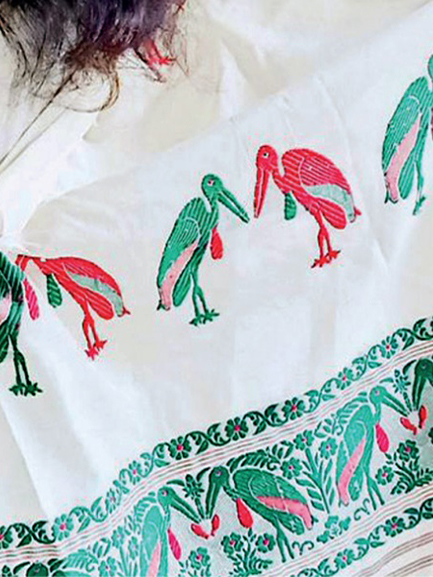
Hargila Motif
Meaning and symbolism: The Hargila motif is a bird motif where the weavers make motifs of the Greater Adjutant Stork. This motif has gained prominence in contemporary times under the backdrop of Purnima Devi Barman and the Hargila Army. This motif remains a good case of how motifs became a symbol of an ecological movement and the empowerment of women.
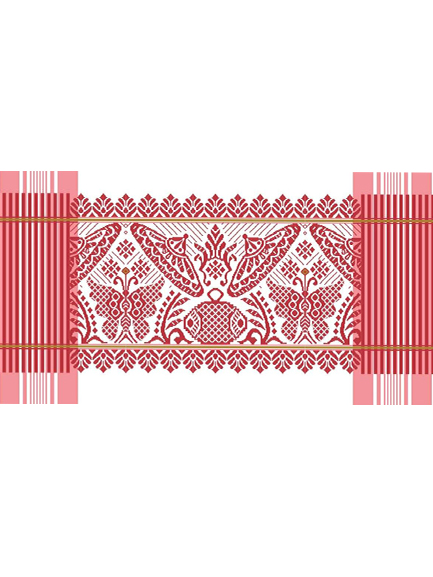
Jaapi Motif
Meaning
Jaapi is a traditional conical hat of Assam, made from bamboo, cane, and Tokoupaat leaves. The word comes from Jaap, meaning a bundle of Tokou leaves. It is an important symbol of Assamese identity and culture.
History and Significance
Jaapi was traditionally used by farmers to protect themselves from sun and rain. It also became a symbol of respect and welcome during Bihu, ceremonies, and special occasions. It has been used since the Ahom period. Different communities, including Bodos, Kacharis, and Tai Ahoms, have their own traditions involving Jaapi.
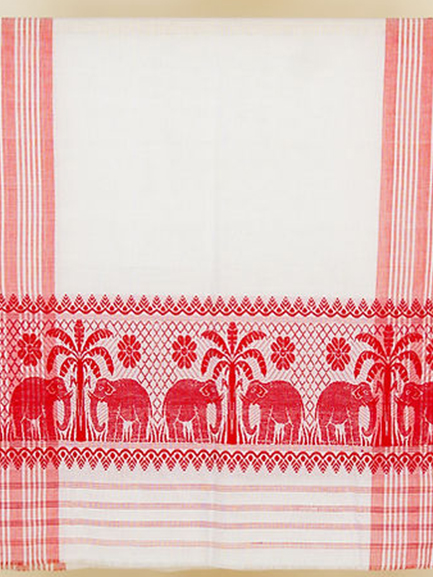
Haati Motif
Motif and Meaning – Hati Motif, which translates to elephant motif, is woven especially in Gamusa. In the world of art, craft and the related symbolism, elephants stand to represent strength, wisdom, stability, and royalty, and a harbinger of good fortune and prosperity. In Assam’s context, elephants stand as a reminder of a valorous past wherein elephants were part of their lives, livelihood, and military strength of the kingdom.
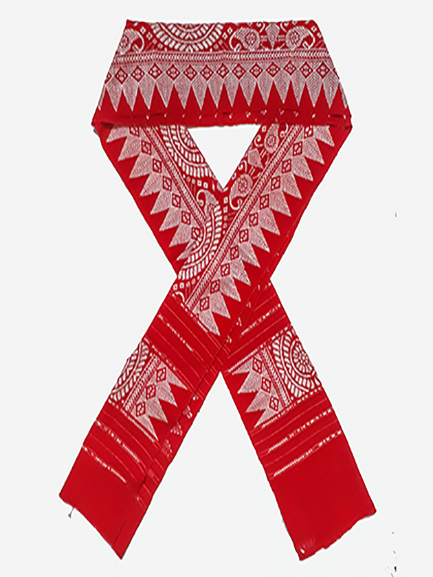
Hajwagor
Meaning
Hajwagor is an important Bodo motif used on Dokhana, Gamsa, Jwmgra, and Aronai. Its triangular patterns represent the hills surrounding the Bodo community and reflect their identity, pride, and spiritual connection to the land.
History and Significance
The Baokhungri Hills hold special spiritual importance for the Bodos and are believed to be the home of Lord Sibrai. The hills are also linked to the story of Princess Deeplai. Every year, people climb Baokhungri Hills during Bwisagu, the Bodo New Year, seeking blessings for happiness and harmony. The event is now also a major cultural festival.
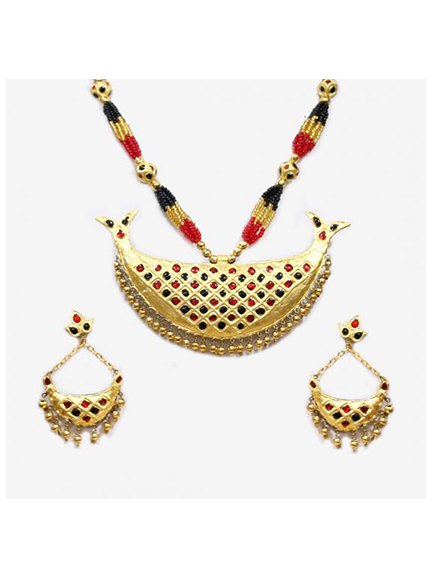
Junbiri-The cresecent moon
Name and Meaning
Junbiri derives its essence and shape from its literal translation. Jun refers to the moon in the Assamese dialect and serves as a symbol of abundance, prosperity, and royalty. Before this motif accentuated the look and feel of Assamese attire, the motif was first used in jewellery making, the history of which can be traced back to Ahom kingship.