

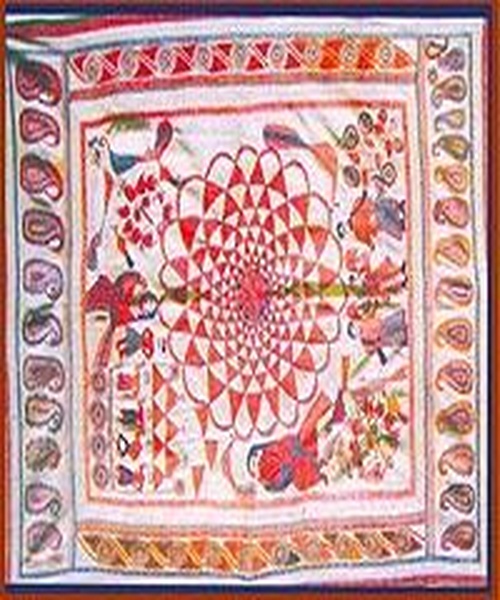
Poddo-(Lotus Motif)
The lotus is an auspicious Hindu motif associated with Lord Brahma, Lakshmi, and other deities. Kantha makers believed that embroidering lotuses could attract good fortune and prosperity. It also symbolises cosmic harmony and is a cherished motif in wedding trousseaus, representing the bride as a manifestation of Lakshmi who brings positivity to the household.
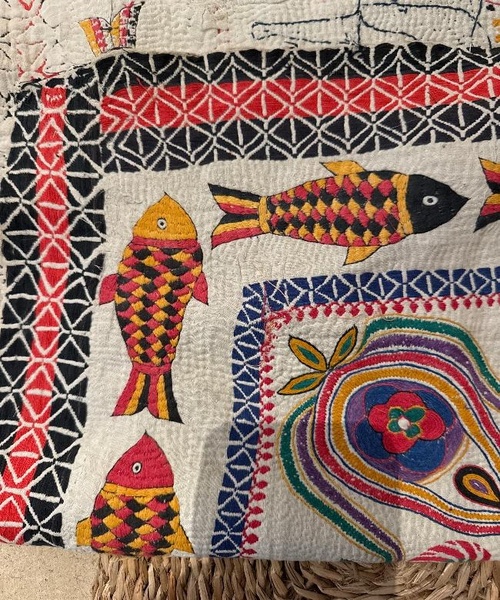
Maach (Fish Motif)
It is one of the commonly used motifs in the Kantha of Bengal. It is also a symbol of prosperity, fertility and purity. It is also a sign of good fortune. In Nakshi Kantha, fish is one of the most popular motifs and an auspicious motif representing the first reincarnation of lord Vishnu, the Matsya avatar. Fish are important for the livelihood and cultural fabric of the area. Fish is part of the staple diet of the region. Often stitched in pairs or groups, they are a symbol of good fortune.
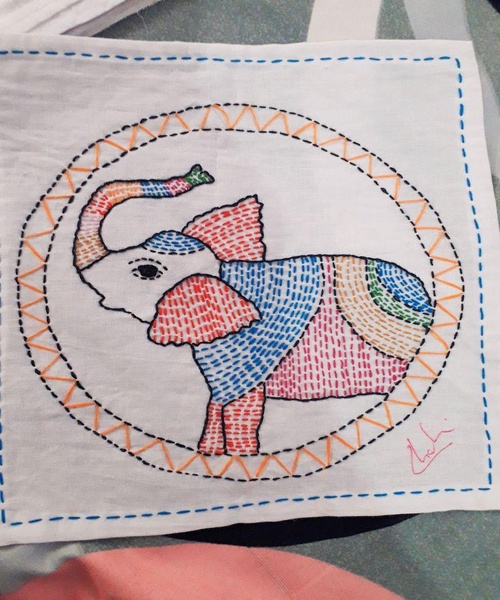
Hathi (Elephant motif)
An elephant is often seen as a symbol of wisdom, longevity, strength and royalty. They are symbols of luck that use their mighty strength to remove obstacles and negative forces.
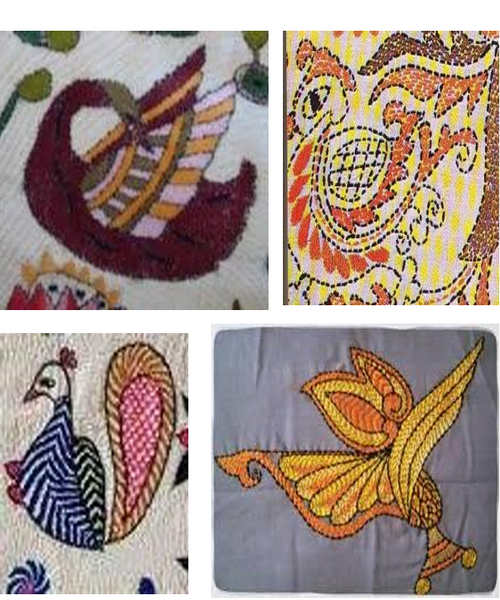
Paakhi (Birds)
These motifs are inspired by the natural surroundings of the reason.
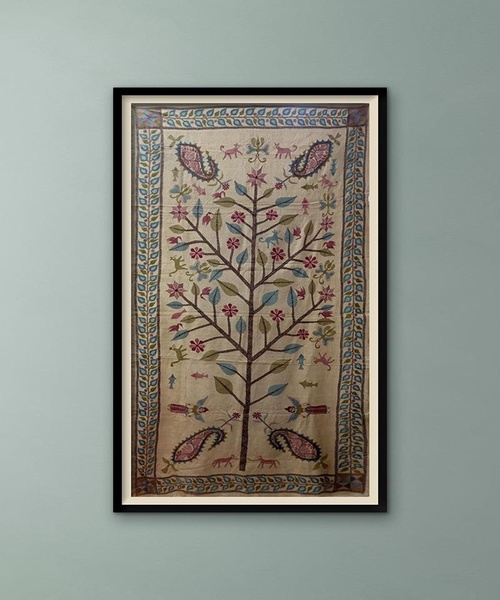
Tree of life motif
The Tree of Life symbolises growth, fertility, and the interconnectedness of life. Depicted with a central, symmetrical tree surrounded by birds, animals, flowers, and fruits, it represents the cycle of life, protection, sustenance, and spiritual harmony. Common in Nakshi Kantha gifted during weddings and childbirth, it is considered a symbol of good fortune.
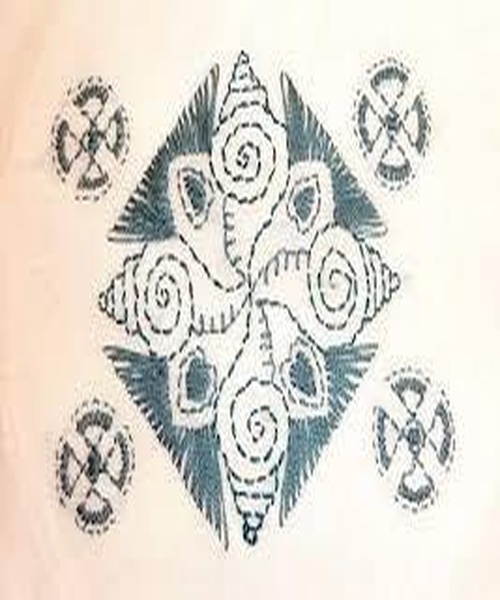
Shankh (Conch Shell)
This motif resembles the shape of a conch sea shell. The sacred conch shell is an integral part of the Hindu symbolic and religious tradition and the god Vishnu. The conch shell is believed to depict the five elements of nature: earth, fire, wind, water and space. Considered to replicate the sound of the primordial sound om, the conch shell is connected with warding off evil influences and is considered a harbinger of new beginnings.
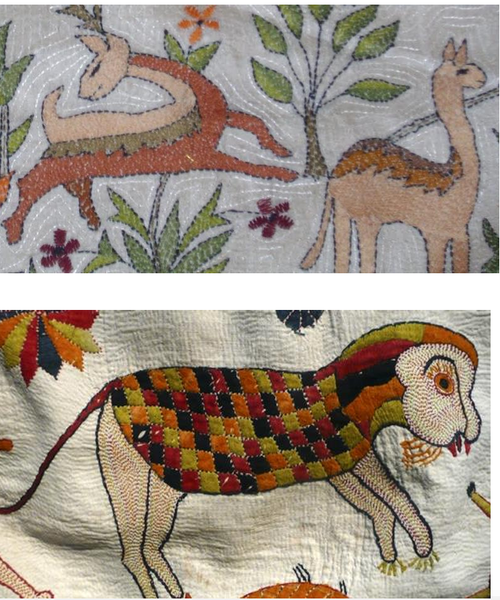
Horin (Deer)
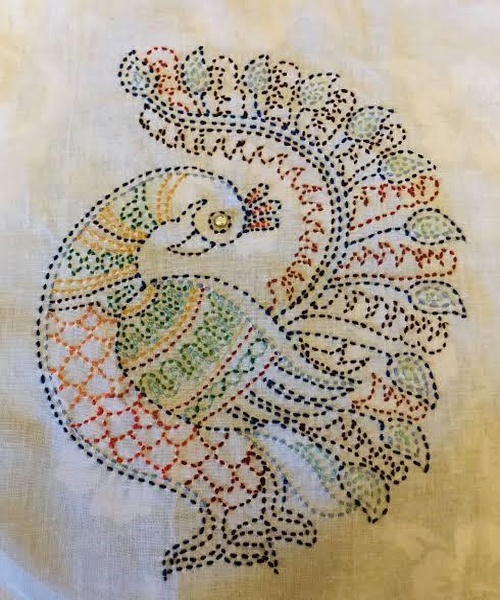
Mayur (Peacock Motif)
It symbolises royalty, honour, and beauty. Its also symbolises immortality and immunity to evil. The peacock motif is widely adopted as a motif in various embroideries as an embodiment of gracefulness
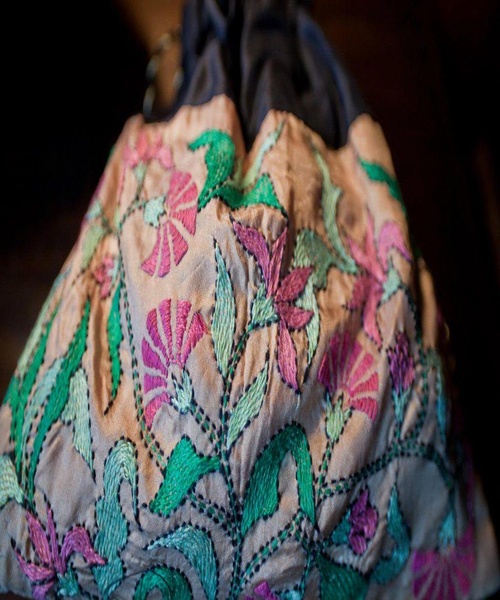
Phool (Flower motif)
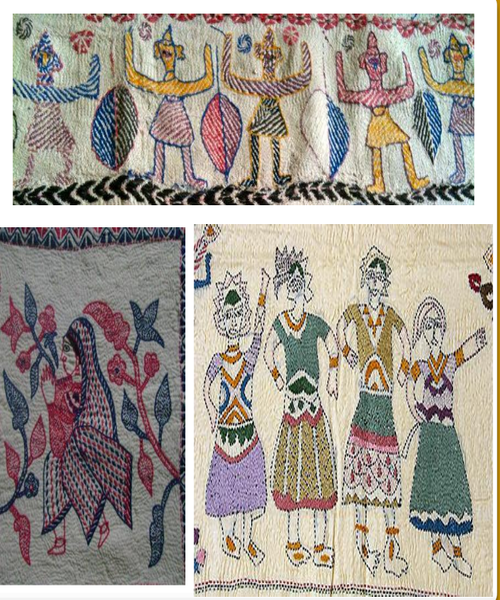
Manush (Human figures)
These are inspired by the mythological stories and day-to-day lives, events that the women experience.
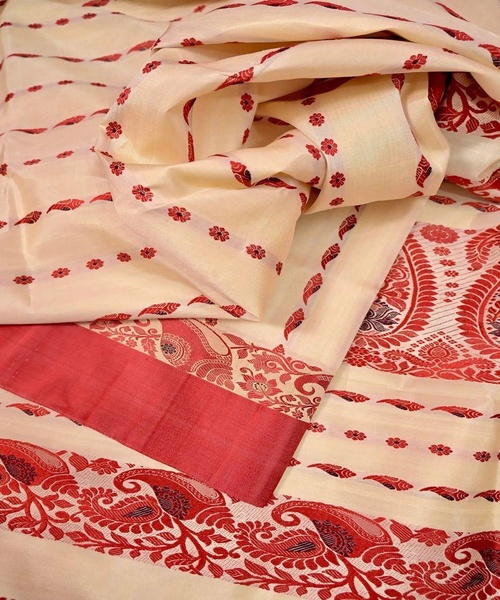
Shankho (Conch Shell)
The Shankha (conch) symbolises purity, auspiciousness and the primordial sound Om. Believed to have emerged during Samudra Manthan, its sacred sound is associated with removing negativity, purification and new beginnings. Lord Vishnu’s Panchajanya represents cosmic creation and divine power. The Shankha is also associated with Lakshmi and prosperity, making it an important symbol in Hindu traditions.
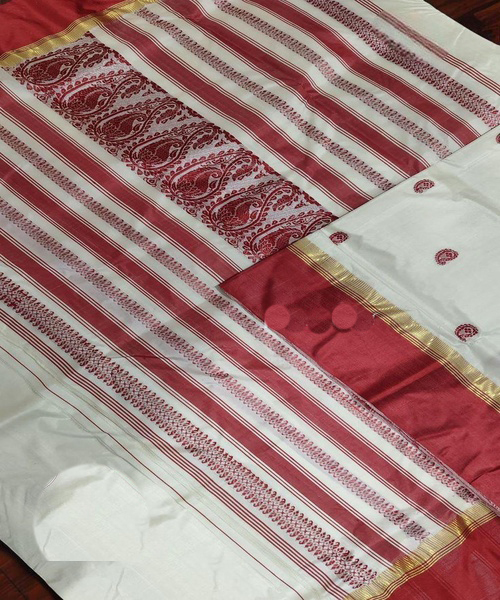
Kalka
The Kalka, or Paisley (Ambi/Buta), originated in Persia as a floral creeper combined with the Cypress tree, symbolising life, prosperity and eternity. Over time, it evolved into the distinctive curved, mango-like form and became prominent in Mughal and Kashmiri Kani shawl weaving. The motif later spread across India and Europe, gaining global recognition through the Scottish town of Paisley. In Bengal, it remains popular in Alpona designs, symbolising prosperity and auspiciousness, and is also traditionally used in bridal adornment.
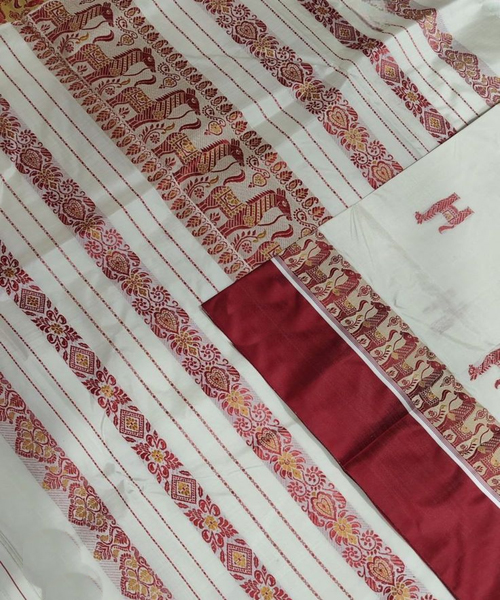
Ghoda (Horse motif)
The Bankura Horse, originating from Panchmura in West Bengal, is a celebrated symbol of Indian terracotta craftsmanship. Crafted by traditional Kumbhokar potters, it flourished under Malla royal patronage. Originally used as ritual offerings to village deities and saints, it transcends religious boundaries. The Panchmura style is distinguished by its elegant symmetry, erect neck, straight ears and intricate detailing. Decorative elements include lotus and creeper motifs, diamond and zigzag patterns, and circular medallions, reflecting the region’s rich artistic heritage.
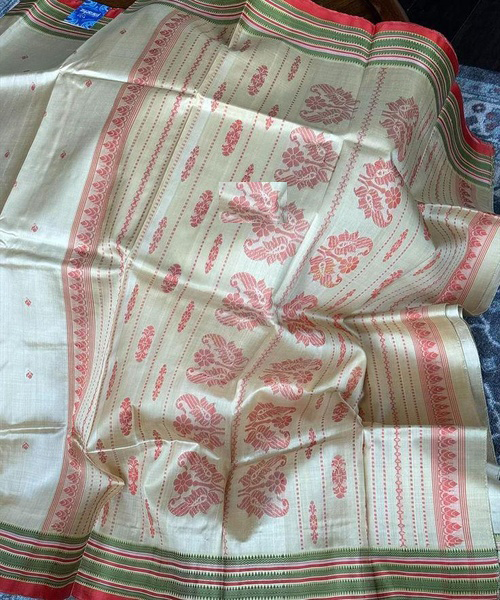
Projapati (Butterfly motif)
The butterfly symbolises transformation, beauty, change and new beginnings, reflecting the journey from caterpillar to butterfly. In West Bengal, the motif, known as Projapoti, carries deeper cultural significance and is associated with Prajapati, the creator of life. Considered auspicious, it is widely used in wedding attire, jewellery and invitations, symbolising blessings, elegance and beauty while adding a graceful, royal touch to traditional designs.
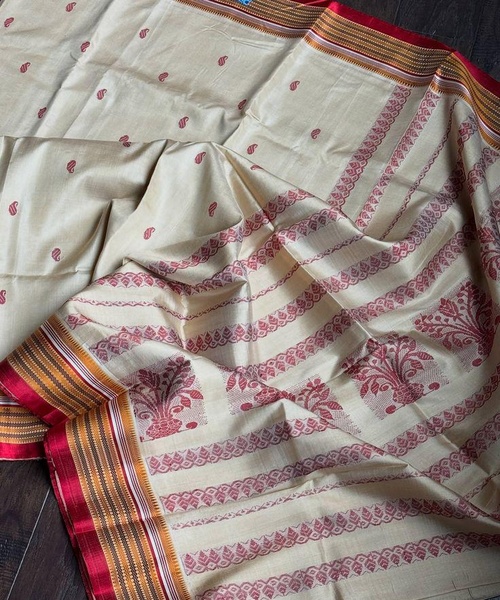
Kalash Motif (Sacred Pot)
The Kalash (sacred pot) is an important symbol in Hindu rituals, representing creation, fertility, spiritual and material abundance. Associated with divine essence and positive energy, it symbolises a bridge between the spiritual and physical realms. Used prominently in weddings, processions and ceremonies, the Kalash is believed to invite prosperity and ward off negative influences.
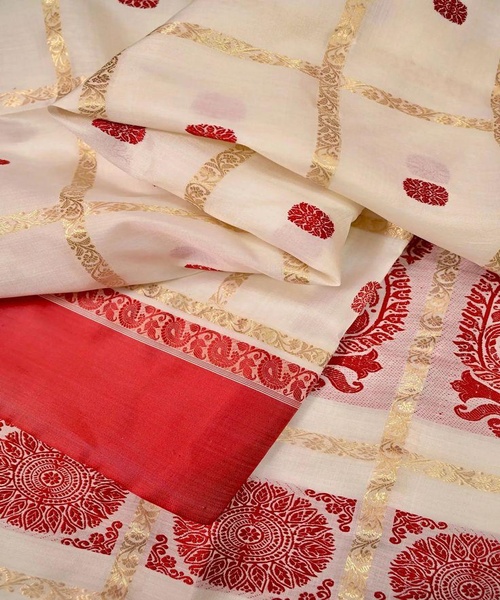
Phool (Flower motif)
This flower design bears a strong resemblance to the Alpona design , a popular folk art of Bengal
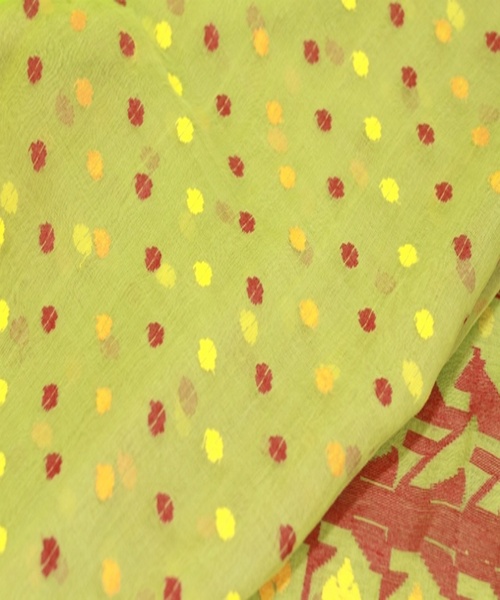
Butidar
Small flower motif arranged as per the artisan’s creative viewpoint. This design is used to cover the entire body of the saree.
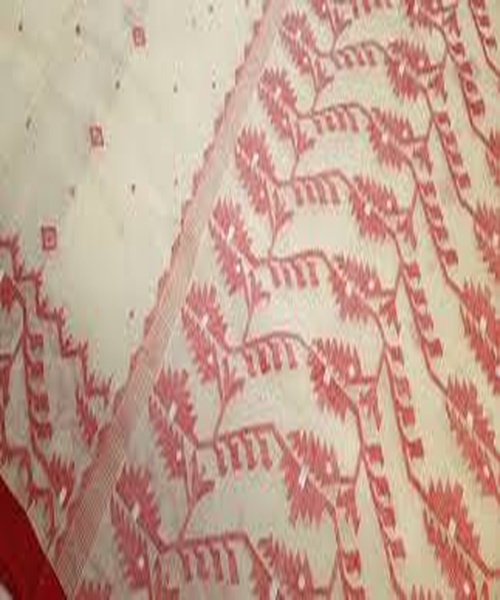
Fulwar
The Fulwar motif, meaning “flower garden,” is a floral design featuring stylised flowers, leaves and creepers arranged in a flowing, rhythmic pattern. In Jamdani sarees, it is often woven across the body, border or pallu, creating a delicate garden-like effect. The motif reflects nature, beauty, abundance and grace, and is valued for its intricate handwoven detailing.
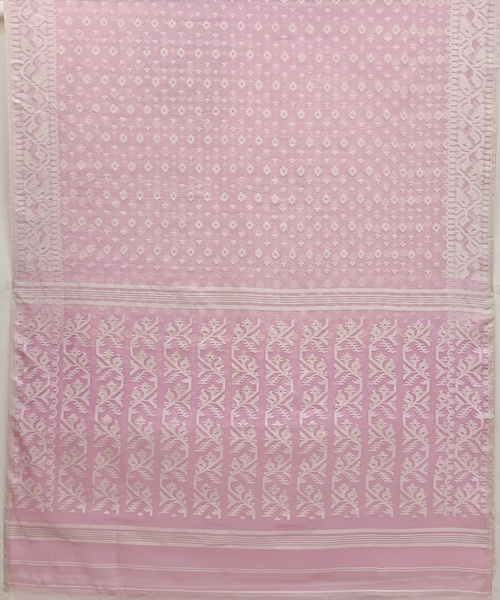
Paisley/Kalka motif
The Paisley or Kalka motif is a graceful, curved, teardrop-shaped design commonly used in Jamdani weaving. Often filled with floral, leafy or geometric details, it adds elegance and rhythm to the saree. Inspired by the traditional buta form, the motif represents beauty, prosperity and auspiciousness and is used as a decorative element on the body, border or pallu of Jamdani sarees.
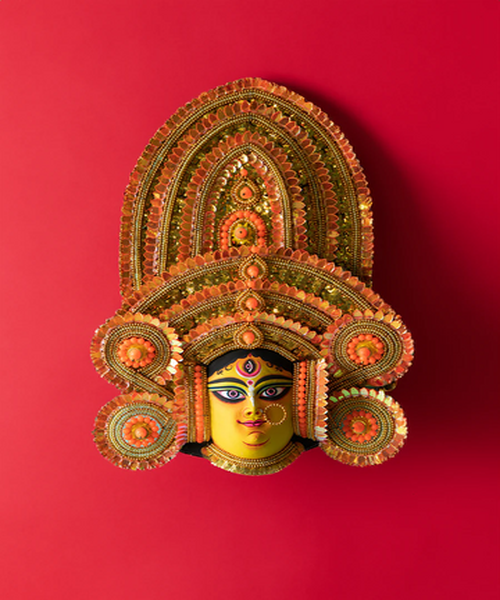
Maa Durga Mukhosh
Maa Durga is the supreme divine feminine and embodiment of Shakti (cosmic energy). When the demon Mahishasura, empowered by a boon from Brahma, terrorised heaven and earth, Brahma, Vishnu and Shiva combined their divine energies to create Maa Durga. Armed with weapons gifted by the gods, she rode a lion and fought Mahishasura for ten days, finally defeating him with her trident. She is therefore known as Mahishasuramardini (Slayer of Mahishasura). The Chhau dance re-enacts this victory during Durga Puja in West Bengal.
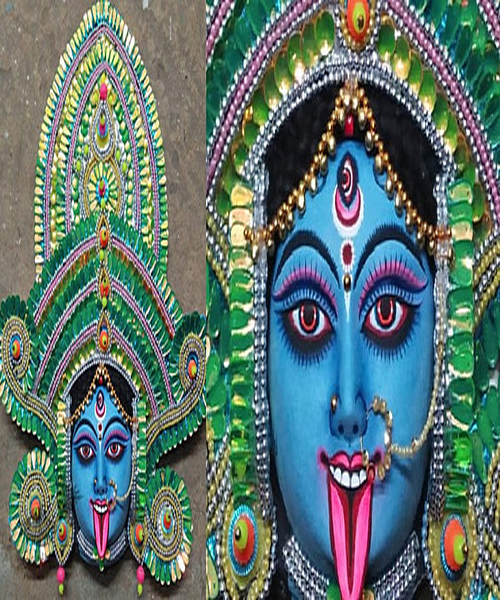
Maa Kali Mukosh
Maa Kali is the goddess of time, death and liberation, representing the powerful divine feminine. According to the Durga Saptashati, the demon Raktabeej could create a new clone from every drop of his blood. Kali emerged from Durga and drank his blood before it touched the ground, destroying his clones and defeating him. Her rage continued until Shiva lay in her path. Realising she had stepped on her husband, Kali stuck out her tongue in shock and guilt. This iconic form is represented in her Chhau mask.
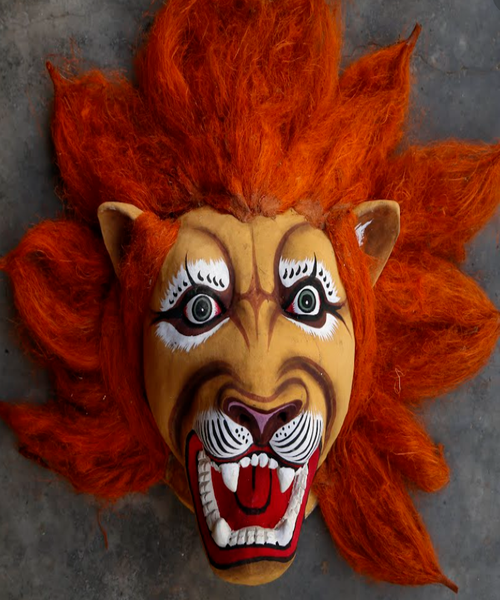
Singho Mukhosh
Lion (Singho Mukhosh): The lion is the vahana of Goddess Durga and accompanied her in the battle against Mahishasura. According to oral traditions, King Himavan gifted the lion to Durga. During the battle, the lion fought Mahishasura when he assumed the form of a bull. Weakened by the combat, the demon then took human form.
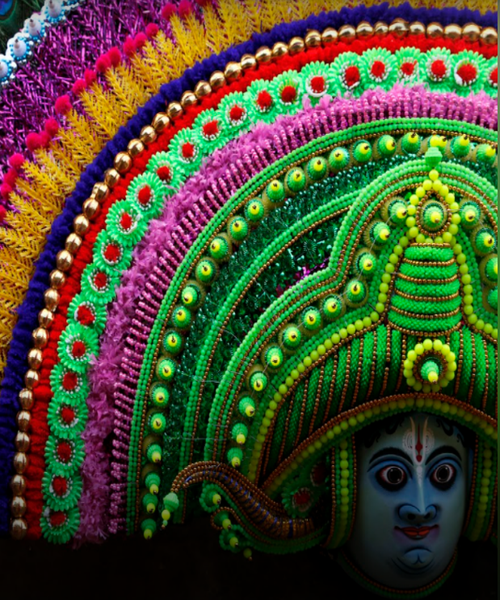
Kartik (Skanda) Mukhosh
This Chhau mask of God Karthik can be seen with decorations in striking colours. Karthik (also called Skanda or Murugan) is the son of Shiva and Parvati and commander of the divine army. He is traditionally considered the most handsome of the gods.
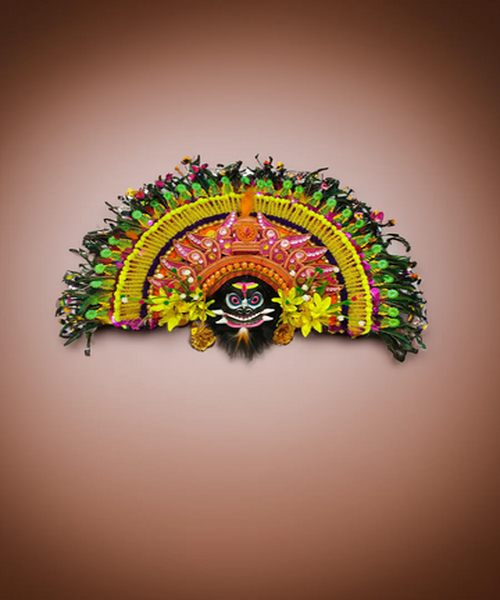
Mahishasura Mukhosh
Mahishasura, a half-buffalo and half-demon, gained a powerful boon that protected him from being killed by a male god. He conquered the three worlds and drove the gods from heaven, representing ego, ignorance and tyranny. To restore peace and dharma, Adi Parashakti appeared as Maa Durga and defeated him. In Chhau performances, Mahishasura's mask is paired with Durga's, symbolising the eternal triumph of good over evil.
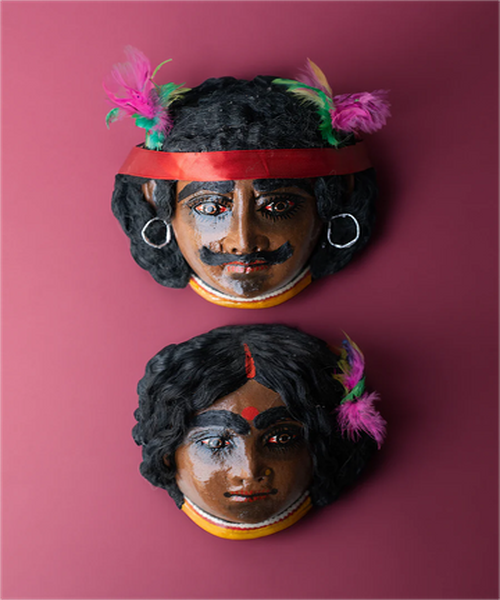
Kirat & Kiratani (Tribal Couple).
Kirat & Kiratani: Rooted in the Mahabharata, they are disguised forms of Shiva and Parvati. During the Pandavas' exile, Arjuna performed penance to obtain the Pashupata Astra. Shiva, disguised as Kirat with Parvati as Kiratani, tested Arjuna after a dispute over a wild boar led to a fierce duel. Arjuna recognised Shiva and received his blessing and the divine weapon. Buddeshwar, Charida's first mask maker, created these as the village's first Chhau masks.
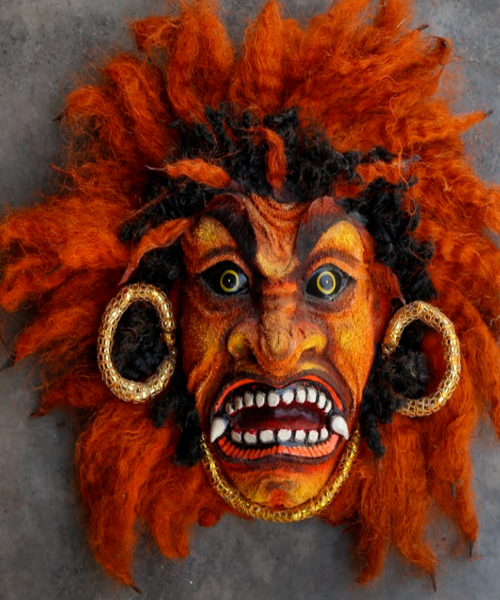
Rakkhosh Mukhosh (Demon Mask)
These masks are used in both ways, as part of the Chaau performance to showcase the evil and demons, and they are also hung in the house, often at the entrance of the house, to ward off evil eyes and bad vibes.
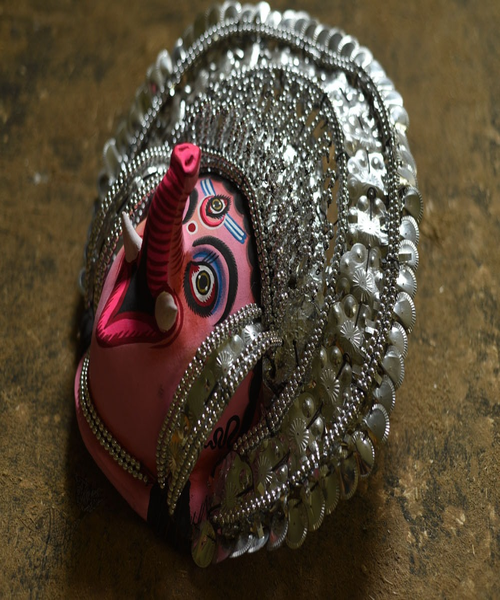
Ganesh Mukhosh
Ganesha is the Hindu god of beginnings, intellect and wisdom, known as the Remover of Obstacles. Parvati created him as a guardian, but Shiva, unaware he was his son, severed his head after a confrontation. At Parvati's request, Shiva restored him with an elephant's head and named him Ganesha, meaning “Lord of the Ganas.” He is also associated with the divine family and musical troupe.
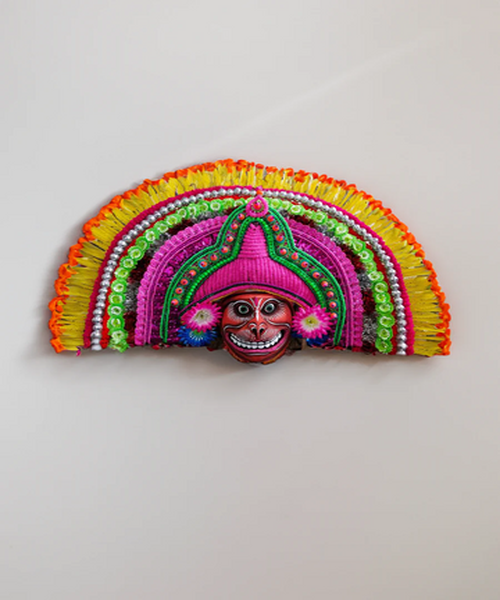
Hanuman Mukhosh
Hanuman is revered as the embodiment of devotion, strength, loyalty and selfless service. When Ravana abducted Sita, Hanuman crossed the ocean to Lanka, found her in the Ashoka garden and delivered Rama's message. He later set Lanka ablaze and brought the Sanjeevani herb from the Himalayas to revive Lakshmana. His unwavering devotion to Rama makes him a central figure in Ramayana-themed Chhau performances, especially Raavana Vaddha (the slaying of Ravana).
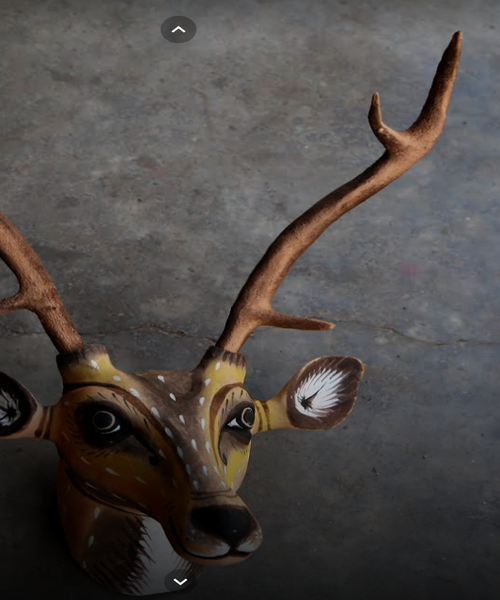
Golden Deer (Maricha)
Golden Deer (Maricha): Made by the Dutt Brothers of Charida Village. In the Ramayana, the demon Maricha takes the form of a dazzling golden deer to lure Rama away from Sita, allowing Ravana to abduct her. This prop is used in Chhau performances to depict this pivotal moment leading to Sita's abduction.
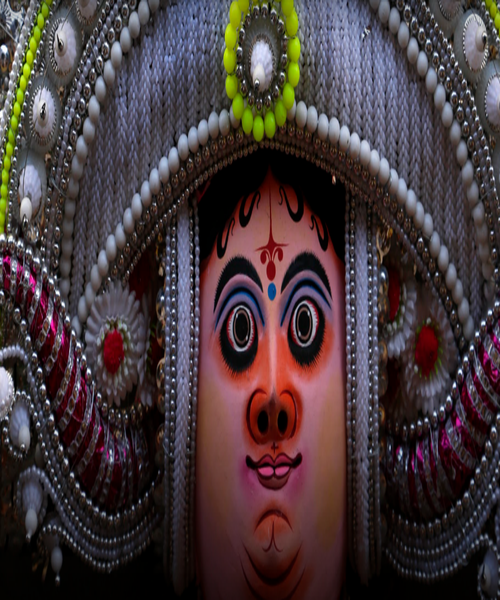
Bhalo lok
Bhalo Lok (Good Hero): The generic good hero character in Chhau is shown with a gentle expression combining innocence and surprise. Pink faces with black moustaches are commonly used for heroes such as Arjuna and Lakshmana. Facial colour and expression help the audience distinguish heroes from demons.
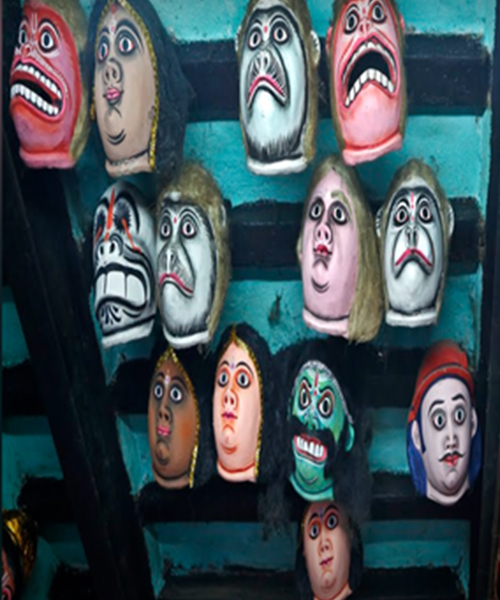
Contemporary Designs
Day-to-day interactions and mythology inspire the mask makers. Some famous personality also inspire their creativity. The masks lately are becoming less elaborate and compact in size, fit to be purchased and given
as souvenirs